Your investment advisor’s fee is the biggest bill you have never seen.
You know the fee, but do you know the cost?
Fixed-fee investment advice directly from Andrew Parrillo, with no percentage of your assets, no products, and no staff between you and him. The difference stays in your account.
The arithmetic is on this page, and the fee calculator lets you run it again with your own numbers.
Hypothetical. $1,000,000 at 8% a year for 20 years. The only difference is a 1% fee billed quarterly. The full math.
What one percent costs over twenty years.
A $1,000,000 portfolio earning 8% a year. The only difference between the two lines is a 1% advisory fee, billed quarterly, the way the industry bills it.
| Ending value with no advisory fee 20 years, 8% annual return | $4,660,957 |
| Ending value after a 1% annual fee Same portfolio, same return, fee drawn every quarter | $3,815,113 |
| What the fee cost you Same portfolio, same return. Only the fee changed. | $845,844 |
Hypothetical. $1,000,000, 8% annual return, 20 years. Fee billed quarterly in advance at one quarter of 1% on the full balance, the industry convention. Figures from the Parrillo Investors fee calculator. Not a projection of any actual account.
Fifty years in the S&P 500, with and without a 1% fee
Here is what happened to $100 put into the S&P 500 in 1975 and left alone, what the same $100 came to with a 1% fee taken out each year, and what $100 in cash buys today. Investing is not complicated, but it does ask for patience and low costs, and this one chart is most of the argument for both.
$27,500
What $100 in the S&P 500 in 1975 is worth today, dividends reinvested.
$10,900 less
What the same $100 is worth if a 1% fee is drawn from it every year.
$17
What $100 left in cash buys today, after fifty years of inflation.
Hypothetical illustration. S&P 500 total return, calendar years 1975 through 2024, $100 invested January 1975, dividends reinvested, no taxes or trading costs. Fee line deducts 1% of the balance each year. Buying power from the Consumer Price Index. Final figures to be replaced with Andrew’s chart data before launch.
The question that your wealth manager does not want you to ask.
It is the first of five questions to put to whoever manages your money. None of them needs any financial expertise, and each one deserves an answer in plain English. Open a question to see what a straight answer sounds like.
In plain language, what specific advantage does your firm provide that justifies its fee compared with owning low-cost index funds and purchasing financial planning separately?
A straight answer names a specific, measurable edge and puts it in writing. “Holistic planning” and “peace of mind” are not advantages, they are what gets said when there is not one.
How has my account performed compared to a simple index fund after your fees over the past one, three, five and ten years, in dollars and in percent?
A straight answer is a one-line table they produce without being asked. If you have never seen it, ask why your credit card company reports every charge and your advisor reports none.
What is the business purpose of your firm, and how does it serve me rather than the firm?
A straight answer says how the firm makes money and what happens to its revenue when your account sits still. If their income rises with your balance and not with your results, you have your answer.
How do you determine my risk tolerance and appetite for return, and how do you structure my portfolio to reflect those preferences?
A straight answer is a documented process: a score, a set of scenarios, and a written policy you can hold them to. “We know you” is not a process.
If I asked you to manage my account to match the index rather than beat it, would your fee change?
If the fee stays the same for doing less, the fee was never for the investing.
What I actually do.
Not a pitch about what sets me apart, just what you get.
One fixed fee, quoted before you engage.
No percentage of assets. Updates afterward on request, for a nominal fee. Five business days to change your mind and owe nothing.
- I measure your risk with a score, not a label.
The questionnaire takes about five minutes. It is built on Nobel Prize-winning research and a data-driven process that derives a score from 1 to 99. Terms like aggressive, conservative and capital preservation are in common use, but they are subjective and mean very different things to different people. A score means the same thing to both of us, and then we talk about whether it feels right. - I build the portfolio to it.
Low-cost index funds, sized to your score, written into an investment policy you can hold me to. - I show you the 2008 case before you commit.
What a 50% decline does to this portfolio, and how long recovery takes. Most people have never been shown this. - I update it when you ask.
The plan is yours once I deliver it. When your circumstances change and you want it revisited, I update it on request for a nominal fee.
It starts with the score.
It takes about five minutes and asks about your preferences, not your account numbers or holdings. The results go to Andrew, not to a mailing list.
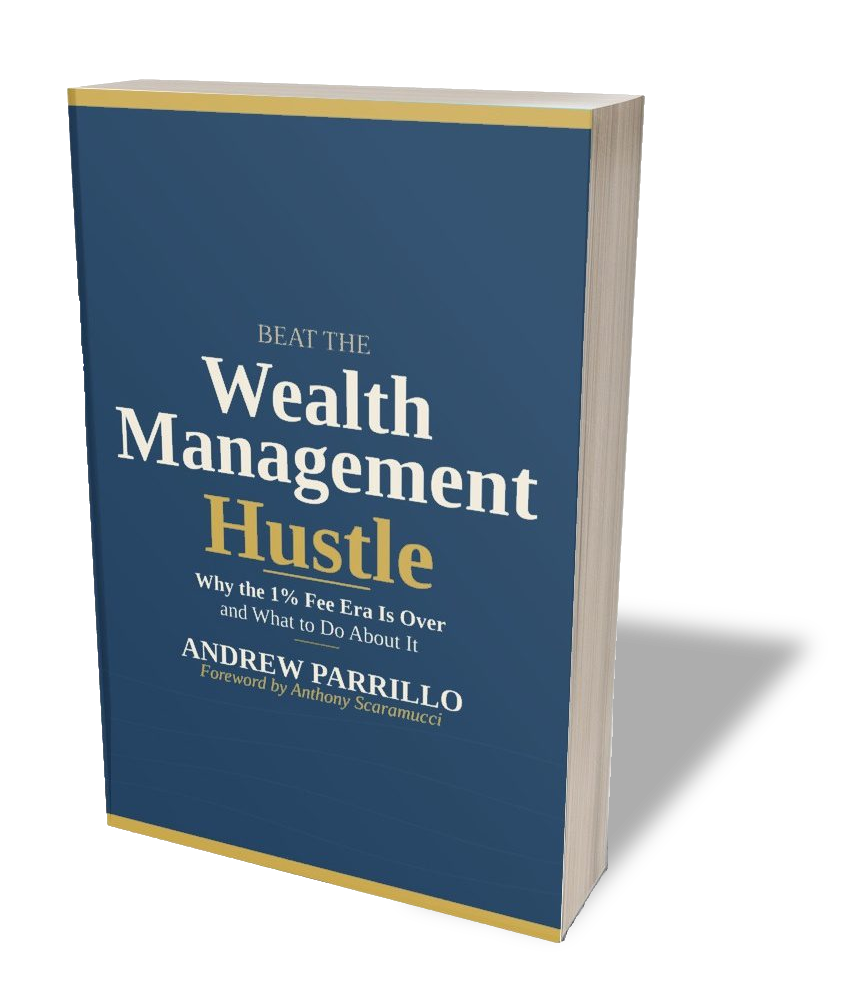
Beat the Wealth Management Hustle
With a foreword by Anthony Scaramucci.
How to invest independently, what the asset-based fee model really costs, and why the industry would rather you never did the math. If you are not willing to spend ten dollars on the rest of your investing life, I cannot help you.
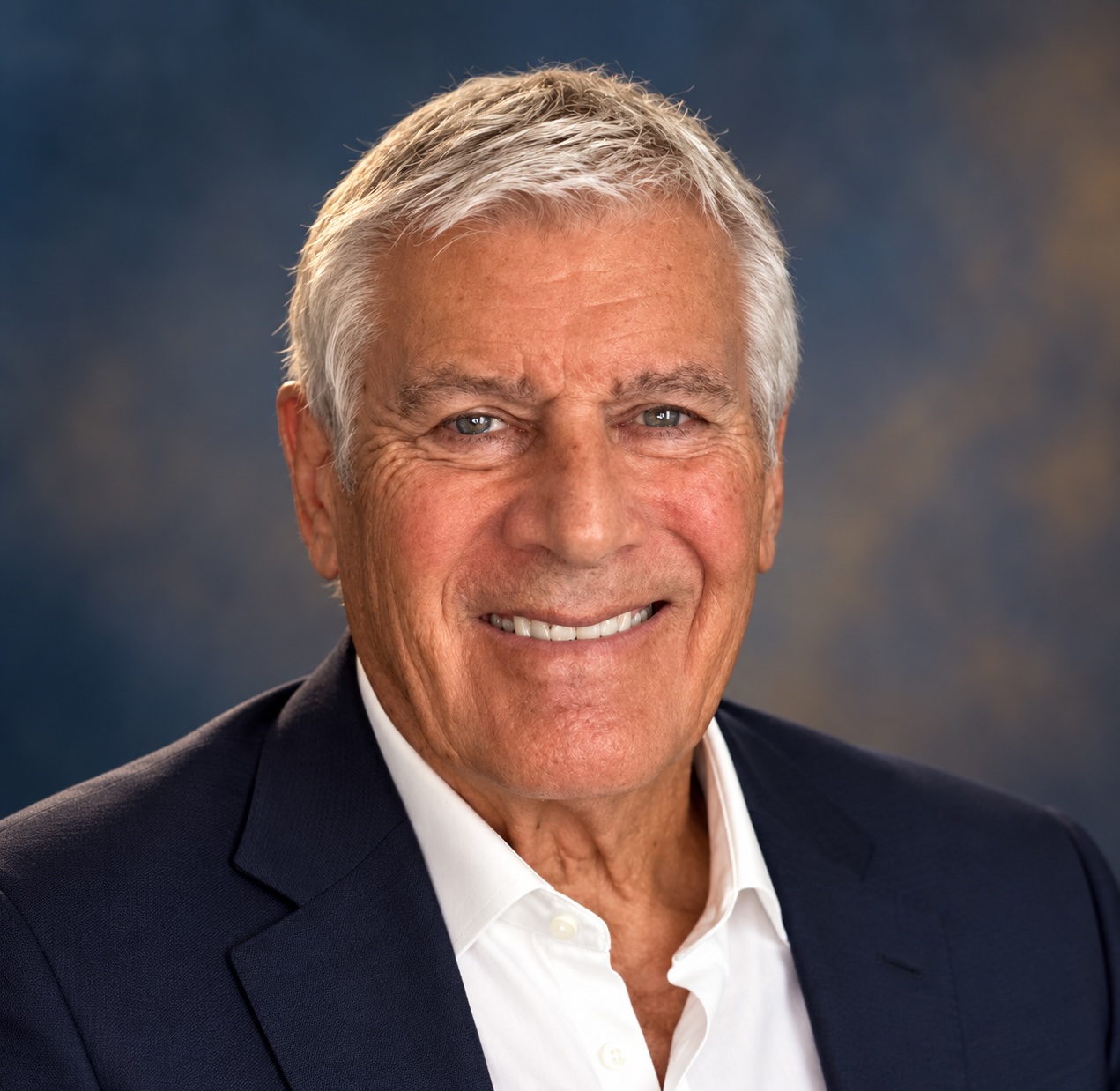
I managed money for institutions and endowments for forty years, for people who checked every number I gave them. You should do the same. Don’t take it on trust, check the math.
Andrew Parrillo, Managing Member. About Andrew
Latest writing
You have seen the cost. The next step is your risk score.
Five minutes, and nothing to pay. Or email Andrew directly. [email protected]